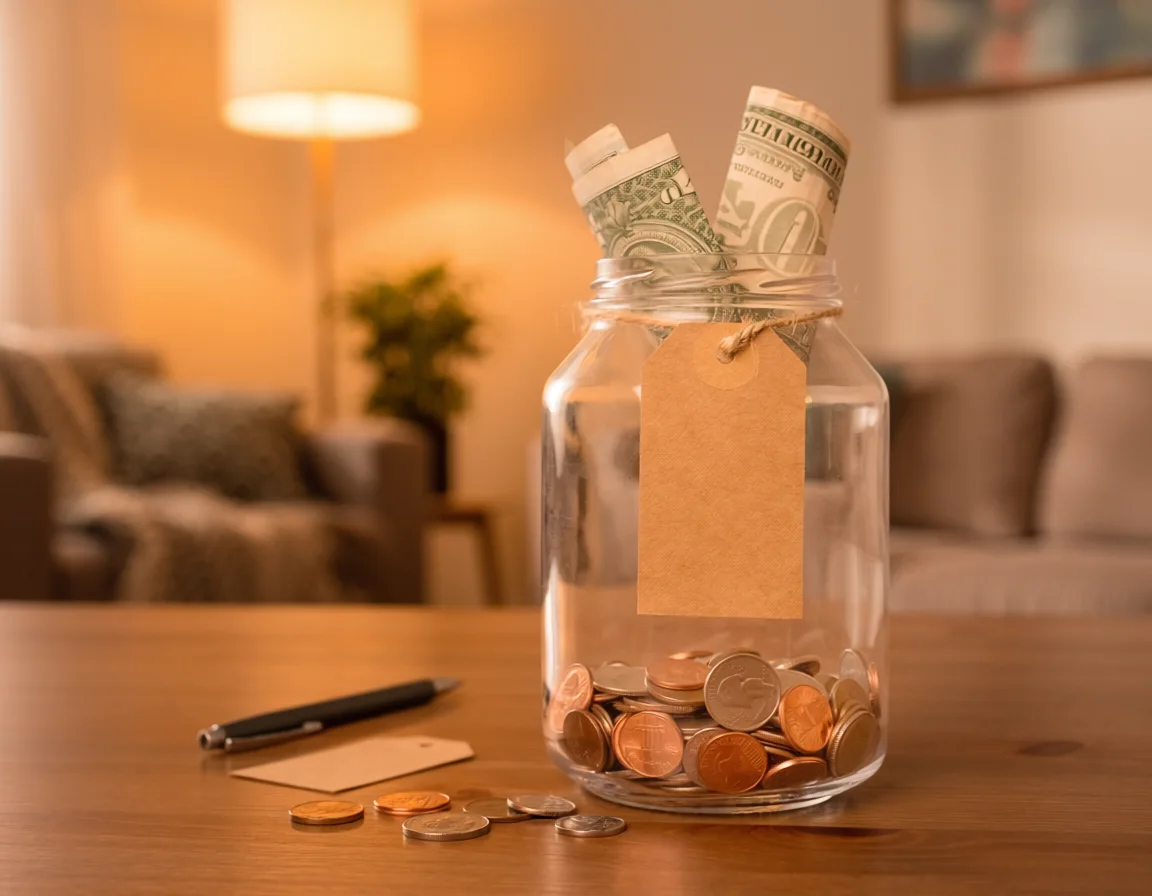
To build an emergency fund: start with a $1,000 starter goal, open a separate high-yield savings account (currently 4–5% APY), automate a fixed transfer on payday, and temporarily cut two or three expenses to accelerate savings. Most people reach $1,000 within 60–90 days. From there, build to 3–6 months of essential expenses — $9,000–$18,000 for the average American household spending $3,000/month.
Why Learning How to Build an Emergency Fund Matters Right Now
Emergency fund statistics in 2026 paint a stark picture. Despite a decade of financial wellness content, Americans remain deeply unprepared for unexpected expenses.
The median emergency fund dropped by half in just one year — from $10,000 in 2025 to $5,000 in early 2026, according to U.S. News survey data. Rising costs, renewed student loan payments, and inflation all contributed. Meanwhile 29% of Americans hold more credit card debt than emergency savings — which means when an emergency hits, it adds to an already expensive debt problem.
The good news is that building an emergency fund is one of the most straightforward personal finance improvements available. It doesn't require investing knowledge, high income, or financial expertise. It requires a system — and the patience to let it work.
What Your Emergency Fund Should Actually Cover
Before deciding how much to save, you need to be clear about what an emergency fund is actually for — because most people use it wrong.
Real emergencies include:
- Sudden job loss or significant income reduction
- Medical bills, ER visits, or dental emergencies not covered by insurance
- Urgent car repairs needed to get to work
- Major home repairs — broken HVAC, roof leak, failed water heater
- Emergency family travel (illness, death)
Not emergencies:
- Holiday gifts or vacation (planned expenses — budget for these separately)
- Regular car maintenance like oil changes or new tires
- Annual bills like insurance premiums (put these in a sinking fund)
- Spontaneous purchases because the money is there
The holiday fund trap: Nearly 23% of Americans used their emergency fund for holiday purchases in 2025, according to Empower research. This is one of the most common ways people find themselves exposed when a real emergency arrives in January or February. Treat your emergency fund as untouchable except for genuine emergencies.
How Much Do You Actually Need?
The standard advice is 3–6 months of living expenses. But "living expenses" means essential expenses only — not your full lifestyle spending. For this calculation, include rent or mortgage, utilities, food, transportation, insurance, and minimum debt payments. Exclude dining out, entertainment, subscriptions, and discretionary spending.
| Monthly Expenses | 3-Month Goal | 6-Month Goal | Who This Fits |
|---|---|---|---|
| $2,000/month | $6,000 | $12,000 | Single person, low cost-of-living area |
| $3,000/month | $9,000 | $18,000 | National average household |
| $4,000/month | $12,000 | $24,000 | Family or higher cost area |
| $5,000/month | $15,000 | $30,000 | Higher income or large family |
Your target should be higher than 6 months if: you're self-employed or freelance (9–12 months recommended), you work in a volatile industry like real estate, construction, or media, you have dependents or significant health expenses, or you have only one income in a two-person household.
Your target can be closer to 3 months if: you have a very stable government or union job, you have low fixed expenses, you're young and healthy with no dependents, or you have other liquid assets available.
Step 1 to Building Your Emergency Fund — Set $1,000 as Your First Goal
The biggest mistake people make when building an emergency fund is setting a goal so large it feels impossible and giving up before they start. Three to six months of expenses is the right long-term target — but $1,000 is where you start.
Here's why $1,000 matters specifically: Vanguard research published in 2025 found that having $2,000 in emergency savings is a psychological tipping point where people's financial stress scores drop significantly. Even smaller amounts help — the CFPB's research shows that households with even $250–$749 in liquid savings are significantly less likely to miss bill payments or go without food after an unexpected expense.
A $1,000 emergency fund covers the most common single financial emergencies: a car repair, a medical copay, a broken appliance, or one month of a critical bill while you sort out a job situation. It won't cover everything — but it breaks the cycle of every unexpected expense going directly onto a credit card.
The math on $1,000: Saving $50/week gets you there in 5 months. Saving $100/week gets you there in 10 weeks. If you can find $200 extra this month — sell something, pick up extra hours, skip dining out — you could reach $1,000 in under 60 days.
Step 2: Open a Separate High-Yield Savings Account
Where you keep your emergency fund matters as much as how much you save. The wrong account costs you money and makes it easier to spend the fund on non-emergencies.
The right account has three characteristics:
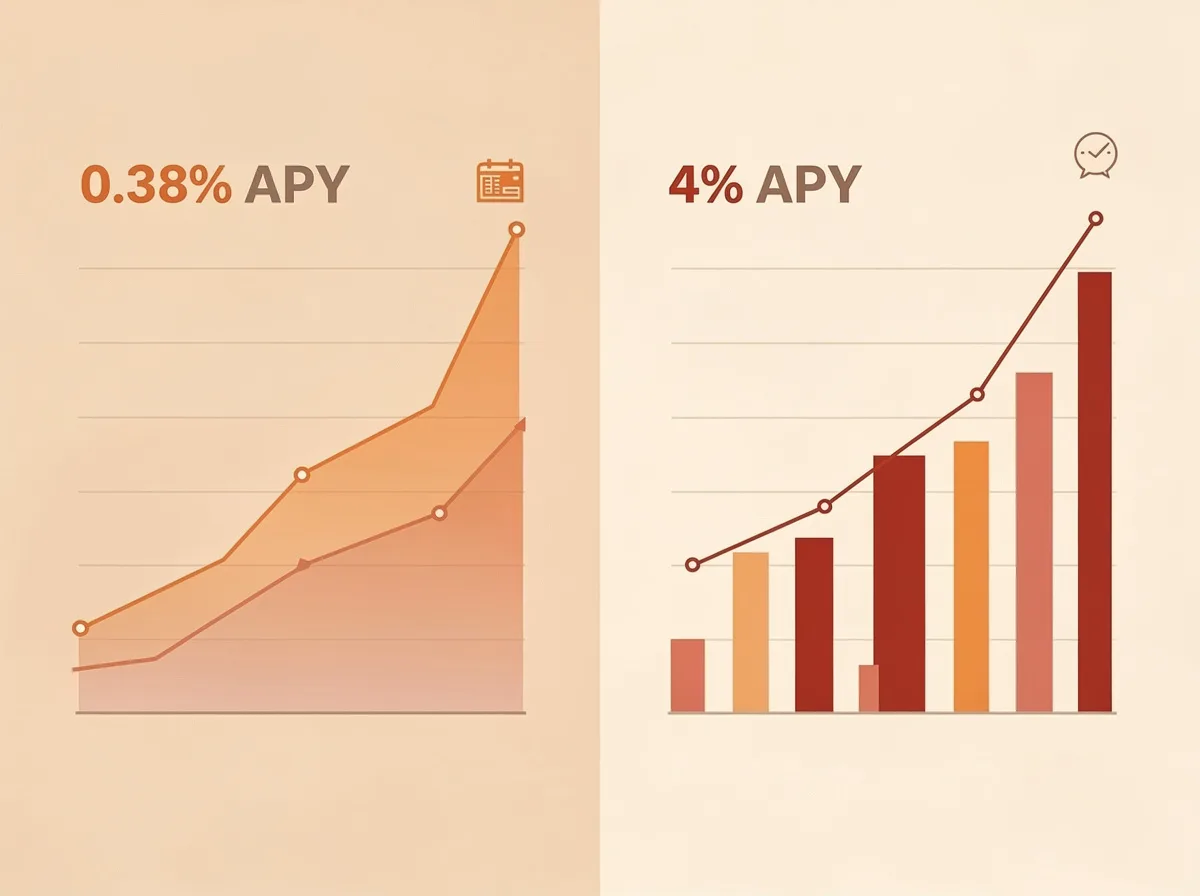
- High APY. The national average savings account pays 0.38% APY as of May 2026. High-yield savings accounts at online banks currently pay 4.00–5.00% APY. On a $10,000 emergency fund, the difference is $362–$462 per year in interest — money you earn for doing nothing.
- Separate bank from your checking account. Keeping emergency savings at a different institution adds friction to withdrawal. When you have to initiate a transfer and wait 1–2 days, you're less likely to dip in for non-emergencies. This friction is intentional and valuable.
- FDIC insured with no monthly fees. Your emergency fund should never lose money. FDIC insurance protects deposits up to $250,000 per depositor, per institution. Avoid any account with monthly maintenance fees that eat into your savings.
Step 3: Automate — Make It Invisible
The most important structural decision you'll make about your emergency fund is this: automate the transfer so you never see the money before it's saved.
Set up an automatic transfer from your checking account to your emergency fund savings account for the day after your paycheck deposits. The amount doesn't need to be large — $50, $100, whatever is realistic. What matters is that the transfer happens automatically before you have a chance to spend the money on anything else.
This approach — called "pay yourself first" — works because it removes the decision. You don't have to remember to save, feel motivated to save, or resist the temptation to spend. The money moves before any of that happens.
After 60–90 days, most people adjust their spending to fit the reduced take-home, and the savings become invisible. The account grows without ongoing effort.
Step 4: Find Your Acceleration Money
Automation builds your fund steadily. But to reach your goal faster — especially that first $1,000 milestone — you need one-time or temporary income boosts.
Fastest sources of acceleration money:
- Tax refund. The average federal tax refund in March 2026 was $3,571 — enough to fully fund a starter emergency fund and then some. Direct your entire refund to savings before it touches your spending account.
- Sell things you own. Most people have $200–$500 worth of unused items: clothes, electronics, furniture, sporting equipment. List them on Facebook Marketplace or eBay. This takes a weekend and generates immediate cash.
- Cut one expensive habit for 60 days. Dining out, alcohol, streaming services you barely use. Temporary cuts feel manageable and produce real results. Cutting $15/day in dining out for 60 days generates $900.
- One extra paycheck or bonus. If you're paid biweekly, two months per year have three paydays. Direct that extra paycheck entirely to emergency savings.
Step 5: Protect It — Don't Let It Become a Spending Account
Building an emergency fund is only half the challenge. The other half is not spending it on things that aren't emergencies. Nearly one-third of Americans who have emergency funds report dipping into them for non-emergencies regularly.
Three practices that protect your fund:
- Define your rules in advance. Write down exactly what qualifies as an emergency in your household before you need to make the decision. When you're stressed and looking at your savings account, having a pre-written rule removes the temptation to rationalize.
- Keep it inaccessible but liquid. Separate bank, no debit card linked, no automatic transfers back. Accessible within 2–3 days via bank transfer — not accessible in 2–3 minutes via a debit card swipe.
- Replenish immediately after use. When you do use your emergency fund for a real emergency, restart your automated savings contribution and treat replenishment as your top financial priority until the fund is rebuilt.
Emergency Fund vs. Paying Off Debt — The Right Order
This is the most common question people have about emergency funds, and the answer depends on your situation.
The standard recommended order:
- Build a $1,000 starter emergency fund
- Pay off all high-interest debt (credit cards, personal loans above 7% APR)
- Complete your full 3–6 month emergency fund
- Invest for retirement and other goals
The reason the $1,000 starter fund comes before aggressive debt payoff: without it, every unexpected expense goes back onto a credit card. You pay down $500 in debt, have a $400 car repair, and your credit card balance goes back up by $400. The emergency fund breaks this cycle.
Exception: If you have very high-interest debt (above 20% APR credit card), the math slightly favors aggressive debt paydown first. But behaviorally, having zero savings creates fragility. Most financial planners recommend the $1,000 starter fund regardless of debt situation for exactly this reason.
Frequently Asked Questions
How much should I have in my emergency fund?
The standard recommendation is 3–6 months of essential living expenses. Start with a $1,000 starter fund — this covers the most common financial emergencies and breaks the credit card cycle. From there, build toward 3 months if you have stable employment and no dependents, or 6–12 months if you're self-employed, have dependents, or work in a volatile industry.
Where should I keep my emergency fund?
Keep it in a high-yield savings account (HYSA) at a separate bank from your checking account. Current HYSAs pay 4–5% APY versus the 0.38% national average. Keeping it at a separate bank adds friction to withdrawal — making you less likely to dip in for non-emergencies. The account should be FDIC insured with no monthly fees and allow penalty-free withdrawals.
How long does it take to build a 3-month emergency fund?
It depends on your monthly expenses and savings rate. For someone with $3,000 in monthly expenses needing a $9,000 fund: saving $300/month takes 30 months; saving $500/month takes 18 months; saving $750/month takes 12 months. Accelerate with tax refunds, selling unused items, and temporary spending cuts. Most people reach $1,000 within 60–90 days with focused effort.
Should I build an emergency fund or pay off debt first?
Build a $1,000 starter emergency fund first, then aggressively pay off high-interest debt, then complete your full 3–6 month fund. Without any emergency savings, every unexpected expense goes back on a credit card — undoing your debt progress. The $1,000 buffer breaks this cycle. Once high-interest debt is eliminated, return to completing your full emergency fund.
What counts as an emergency fund emergency?
True emergencies: unexpected job loss, medical bills not covered by insurance, urgent car repairs needed to get to work, major home repairs, and emergency family travel. Not emergencies: holiday gifts, vacations, planned purchases, and regular bills. Nearly 23% of Americans used their emergency fund for holiday purchases in 2025 — leaving themselves exposed when a real emergency arrived.
Sources & References
- U.S. News — 2026 Financial Wellness Survey (1,216 adults, January 2026)
- Bankrate — Emergency Savings Report, May 2025
- Empower — The Safety Net: Americans Have $500 in Emergency Savings, June 2025
- Federal Reserve — Survey of Household Economics and Decisionmaking (SHED), 2024
- Vanguard — The Relationship Between Emergency Savings and Financial Well-Being, April 2025
- CFPB — Emergency Savings and Financial Security research
- FDIC — National Average Savings Rate, May 2026: 0.38% APY